
What is RFID

Short for Radio Frequency Identification, RFID is an auto-ID technology that is anticipated to enable advanced information services and bring us closer to a ubiquitous society.

Besides barcodes and two-dimensional (2D) barcodes that are conventionally used to carry data, newer technologies such as RFID and voice recognition are now being introduced at a greater

speed for improving business operations and security.

As RFID develops and its product lineup continues to expand, the technology is set to become an

increasingly important tool for many applications in various industries such as manufacturing, logistics, retail, service, transportation and healthcare.

PJM

Advantages of using RFID

Read and write data without making contact

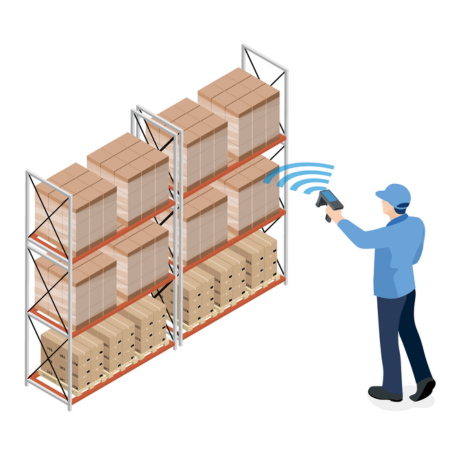
RFID tags need not be held right next to reader devices like barcodes, meaning that they can be read even from tall shelves.

Read and write data without making contact

No line of sight required

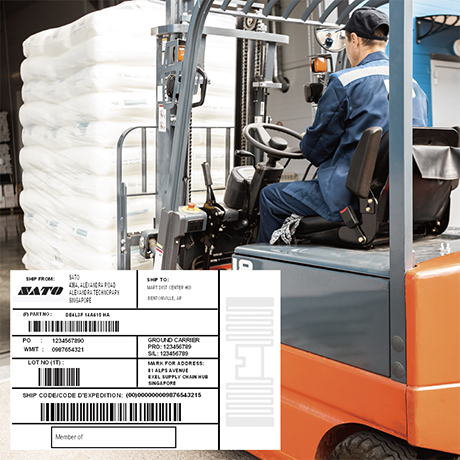
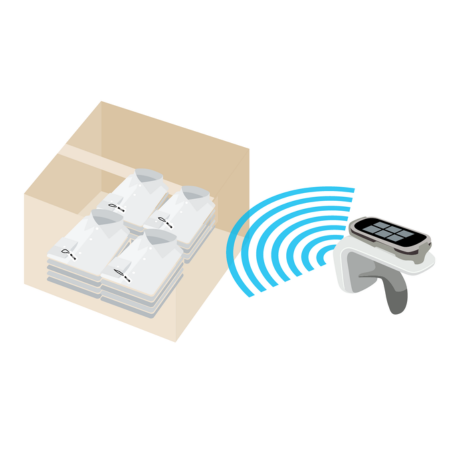
RFID tagged items in boxes can be scanned accurately without being unpacked as the tags can be read/written even when they cannot be physically seen. Reliable performance even when used in dirty outdoor environments.

No line of sight required

Bulk reading

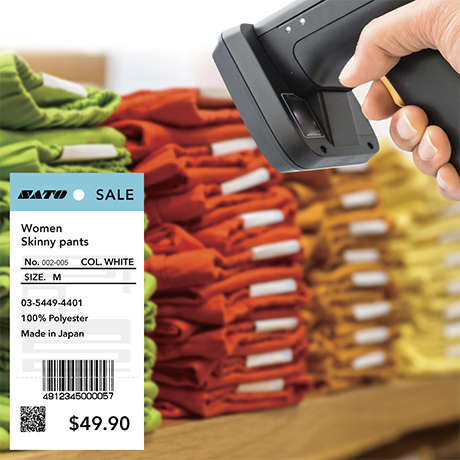
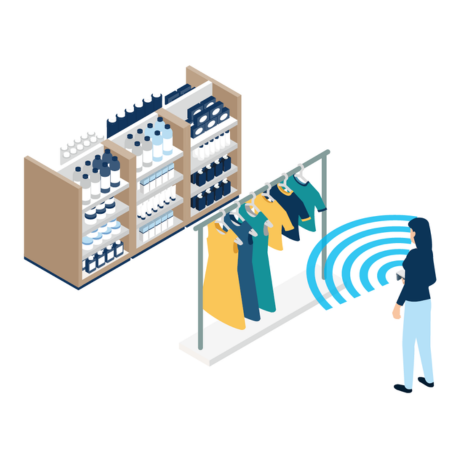
Large volumes of RFID tags can be read simultaneously and do not have to be scanned individually like barcodes.

Bulk reading

Data rewrite capability

Information in RFID tags can be overwritten repeatedly for different usages so there is no need to keep changing tags, for example, when reusing returnable containers.

High levels of security

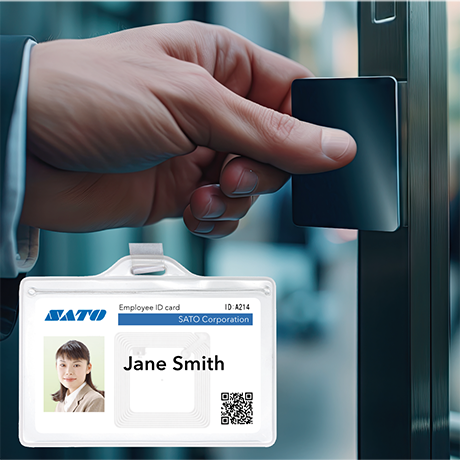
As RFID chips cannot be easily copied, they provide counterfeit protection when used for personal identification cards and tickets.

High levels of security

Main frequencies used in RFID systems

RFID systems operate in various frequency ranges. Primarily used are the low frequency (LF), high frequency (HF), micro-wave, and ultra-high frequency (UHF) bands, and RFID labels/tags read differently at each of these frequencies. SATO offers a wide range of mainly UHF and HF (including NFC and PJM RFID) products, tailoring our RFID solutions to meet customers’ needs and applications.

UHF (860–960 MHz)

Characteristics of RAIN RFID (UHF RFID)

RAIN RFID (UHF RFID) can identify items from several meters away and read multiple tags at once. This makes it ideal for quickly tracking products, inventory and assets in warehouses, stores and other large spaces.

Bulk reading Bulk reading
Long read range Long read range

HF (13.56 MHz)

Characteristics of NFC (HF RFID)

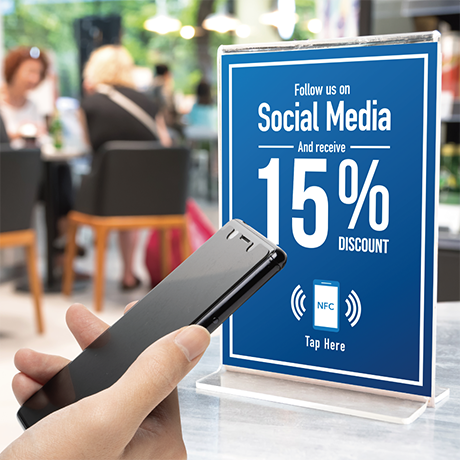
NFC (HF RFID) works at very close range, usually by bringing a device near a tag. Because it is widely supported by smartphones and tablets, it is commonly used for authentication, access control, cashless payments and interactive customer experiences.

Tap for identity verification Tap for identity verification
Linking to online content Linking to online content
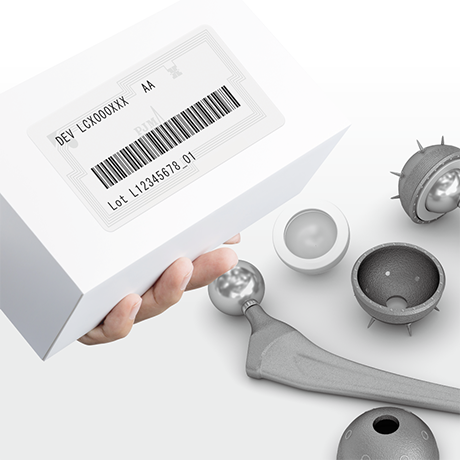
Characteristics of PJM RFID

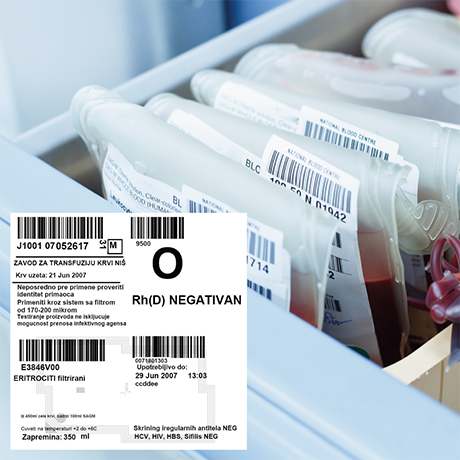
PJM stands for Phase Jitter Modulation and is a type of HF band RFID technology. It is used in the management of blood products because of its excellent readability near liquids, and in the management of medical devices because of its ability to withstand sterilization processes.

Reliable reading at close range Reliable reading at close range
Capable of reading around liquids Capable of reading around liquids

Downloads

RFID Brochure

Filename
Public_RFID Brochures 05. 2025_PDF_v3.pdf
Format
PDF
Size
4.79 MB

SATO support starts here

SATO strives to be the most trusted Auto-ID solution provider worldwide, bringing cutting edge labeling and tagging solutions to customers across diverse markets including manufacturing, logistics, retail, food & beverage and healthcare.